


 Tandoors
 Accessories for tandoors
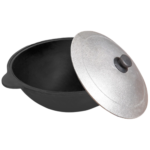 Uzbek cast iron kazans
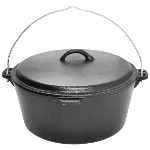 Cast iron cauldrons
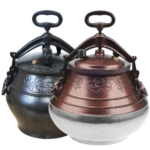 Afghan Kazans
 Misgaran
 Rashko Baba
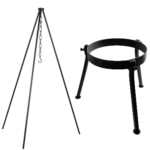 Cauldron Tripods and Stands
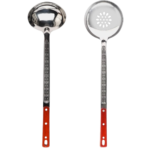 Accessories for kazan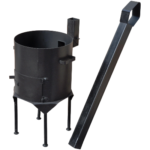
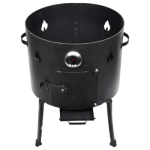 Outdoor Cauldron Stoves without chimney
 Stove ring sets
 Charcoal Grills with lid
 Mangals
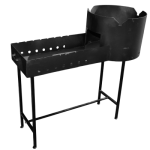 Mangals with stove
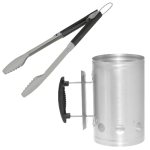 Mangal and grill accessories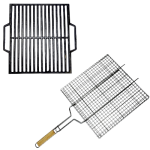
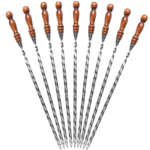
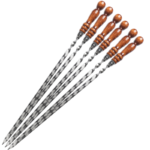 Barbecue skewers
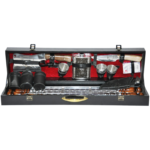 Barbecue skewer sets
 Cast iron pans
 Picnic pans
 Sadzh pans
 Gas burners
 Gas Accessories

 Juice presses
 Fruit crushers
 Knives
 Uzbek knives / Pchak
 Kizlyar knives
 Axes
Axes Uzbek axes / Gimyakesh
 Kizlyar axes
 Uzbek plates / Lyagan
 Tea sets
 Decorative tableware
Uzbek Cast Iron Kazan: Full Guide 2026
This guide will help you understand what an Uzbek kazan is, how to choose the right volume and where to cook (at home or in an outdoor kitchen), as well as how to recognize quality cast iron and how to properly care for a kazan.
🧭 How to choose an Uzbek kazan (main: volume + where you will cook)
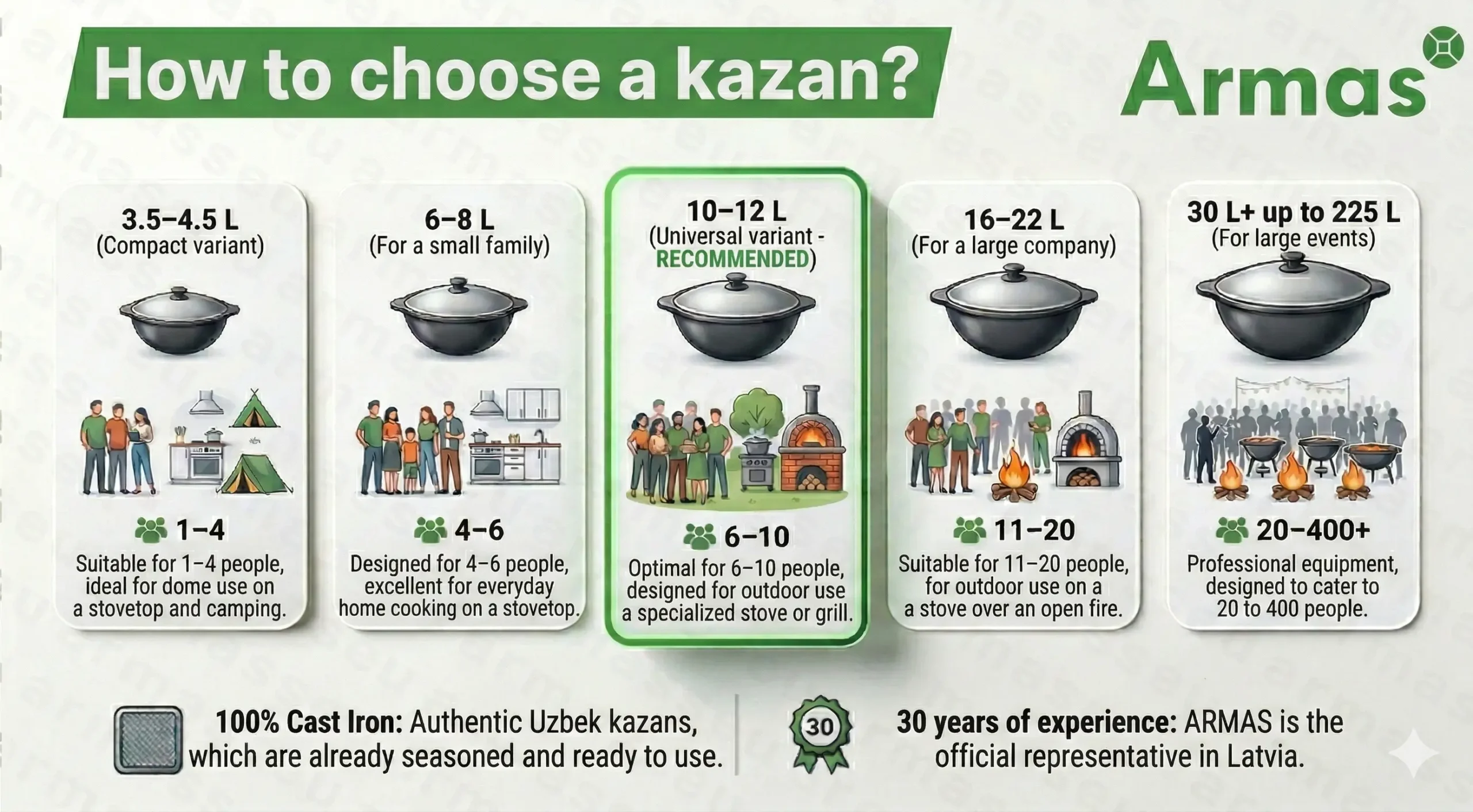
Volume is the most important factor. Think not only about portions, but also about comfortable stirring: cooking less = more space for stirring, while a larger volume is more convenient for cooking “with reserve”. If you are choosing between two sizes, it is usually safer to choose the larger one.
| Volume (L) | People | Best for |
|---|---|---|
| 3.5–4.5 | 1–4 | Extra compact option for home / small portions |
| 6–8 | 4–6 | Home portions, small family |
| 10–12 | 6–10 | Universal option (most popular) |
| 16–22 | 11–20 | For a group, garden, outdoor kitchen |
| Large volumes (events / professional use) | ||
| 30 | 20–30 | Events / larger group |
| 40 | 30–45 | Events / outdoor kitchen |
| 50 | 45–55 | Events / catering |
| 60 | 55–65 | Events / catering |
| 80 | 80–100 | Large events |
| 110 | 140–180 | Large events / professional |
| 225 | 250–400 | Very large events / catering |
In classic kazan cooking, heat should “wrap” the pot from all sides - not only from the bottom, but also along the walls. That’s why a kazan works most authentically on a kazan stove, over an open fire, on a grill or on a tripod.
🏡 At home (gas / induction / electric)
- Gas stove - the most practical home option.
- Induction - possible if the kazan has a flat outer bottom. (Cast iron usually works on induction; aluminium often needs an adapter.)
- Electric stove - also possible if there is a flat outer bottom, but heating up may be slower than on gas.
When cooking at home, consider practical dimensions: whether the cooktop is wide enough, whether the pot is blocked by a wall, and whether the kazan has a stable place on the surface.
🔥 Outdoors (stove / open fire / grill / tripod)
- Kazan stove - the most even and “correct” heat along the walls.
- Open fire - a classic option if you have a stable base and safe placement.
- Grill / stand / tripod - convenient for trips and the garden; the key is stability and safety.
⚖️ Cast iron vs aluminium: key differences
- ✓Stable, even heat - ideal for plov and stews.
- ✓Holds temperature longer - heat fluctuates less, results are more predictable.
- ✓Very durable - with proper care, it lasts for years.
- ✓Great for outdoor cooking - stove, open fire, grill, tripod.
- ✓Induction - usually works (especially with a flat outer bottom).
- !Heats up fast, cools down faster - heat may be less stable.
- !More sensitive to overheating - needs more attention over aggressive heat.
- !Induction - often requires an adapter (may not work without it).
- !For long cooking and plov, people usually choose cast iron for more even heat.
🟢 Bottom: flat or round
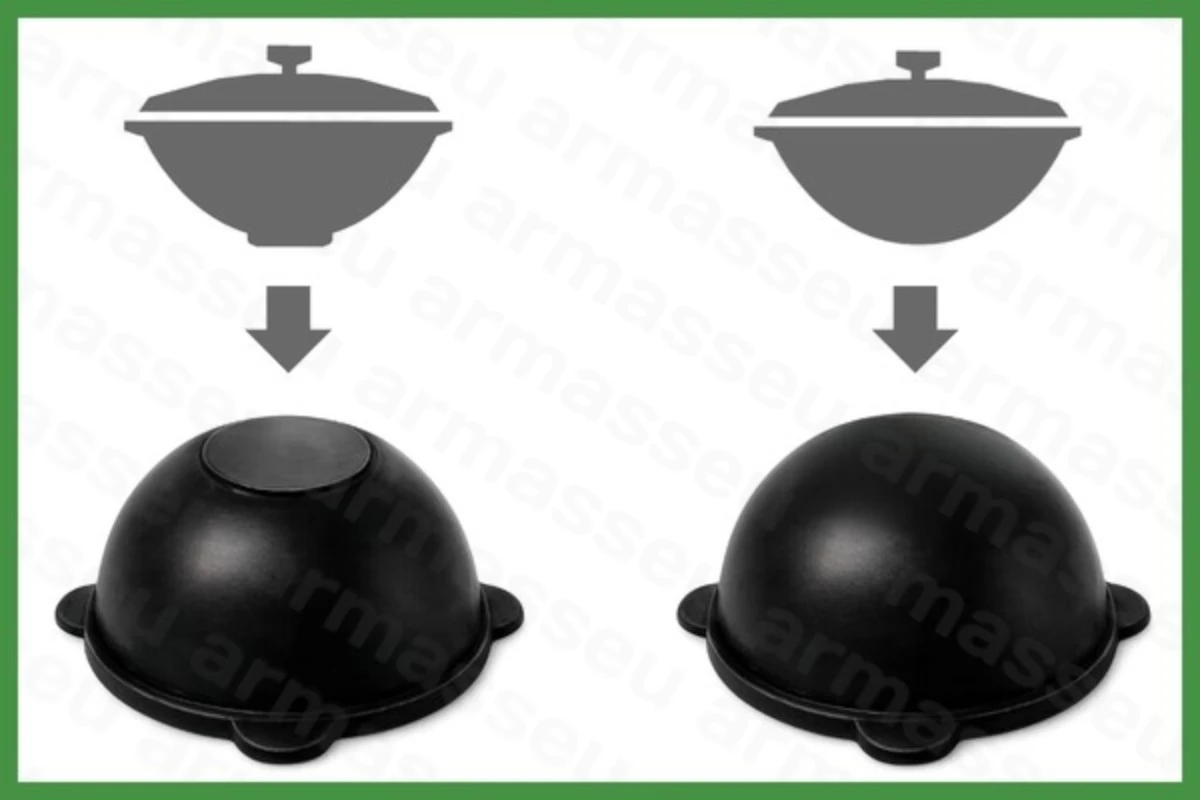
The difference between a “flat” and “round” bottom is only on the outside. The inside is the same in both cases - a kazan is always spherical (round) inside.
- Stands stable on a flat surface (stove, table, countertop).
- More convenient for home use and universal scenarios.
- On a flat surface it does not stand stable - it may wobble.
- Usually intended for stoves, stands, or cooking over an open fire.
🧢 Why an Uzbek kazan often has an aluminium lid
Many traditional models have an aluminium lid because it is lighter, practical and convenient for everyday cooking.
Important note: kazans above 22 L are often supplied without a lid. If you need a lid for a large kazan, the most common solution is to order one from a local craftsman.
🔎 How to recognize “good cast iron” (normal vs defect)
- Thickness and weight: quality cast iron is usually heavy and stable.
- Casting quality: even walls, without critical cracks.
- Surface: slight texture or small unevenness is often normal for casting.
- Stability: the pot should stand securely on the intended surface.
- Normal: minor casting characteristics (texture, small unevenness) that do not affect cooking.
- Defect: cracks, holes, deformations that affect safety or stability.
- If you’re unsure, send a photo - we’ll help assess quickly.
100% cast iron vs cast-iron alloy
On the market you may find both 100% cast iron and various cast-iron alloys. Alloy composition can affect structure and resistance to sudden temperature changes. If you’re interested in a specific model, write to us - we’ll help check the material and intended use.
🔥 First use (ARMAS: kazans are already pre-burned)
What to do before the first cooking
- Pour a little vegetable oil, heat it and simmer ~10 min so the oil contacts the walls.
- Pour the oil out, wipe the inside with a clean dry cloth.
- Before cooking, heat the kazan gradually, not immediately on maximum heat.
- For the first 2-3 uses, cook with enough oil; avoid very acidic dishes.
🧼 Care and storage (so the kazan lasts for years)
After each cooking
- Do not put a hot kazan under water - let it cool naturally.
- Never soak the kazan in water.
- Wash with warm/hot water and a soft sponge.
- Dishwashing detergents are not recommended (they remove the protective oil layer).
- After washing, dry completely and apply a very thin layer of oil.
Storage
- Store in a dry place.
- For long-term storage, it’s recommended to leave a dry napkin inside and not close the lid completely airtight.
If rust appears
- Rust usually appears due to moisture or insufficient drying.
- Remove rust with a soft brush or fine abrasive, wash, dry, heat and apply oil.
What you must not do
- Do not use aggressive chemicals; do not put in a dishwasher.
- Do not pour cold water into a hot kazan and do not put a cold kazan on very strong heat immediately.
- Do not leave an empty kazan on strong heat.
- Do not keep cooked food in the kazan for long-term storage.